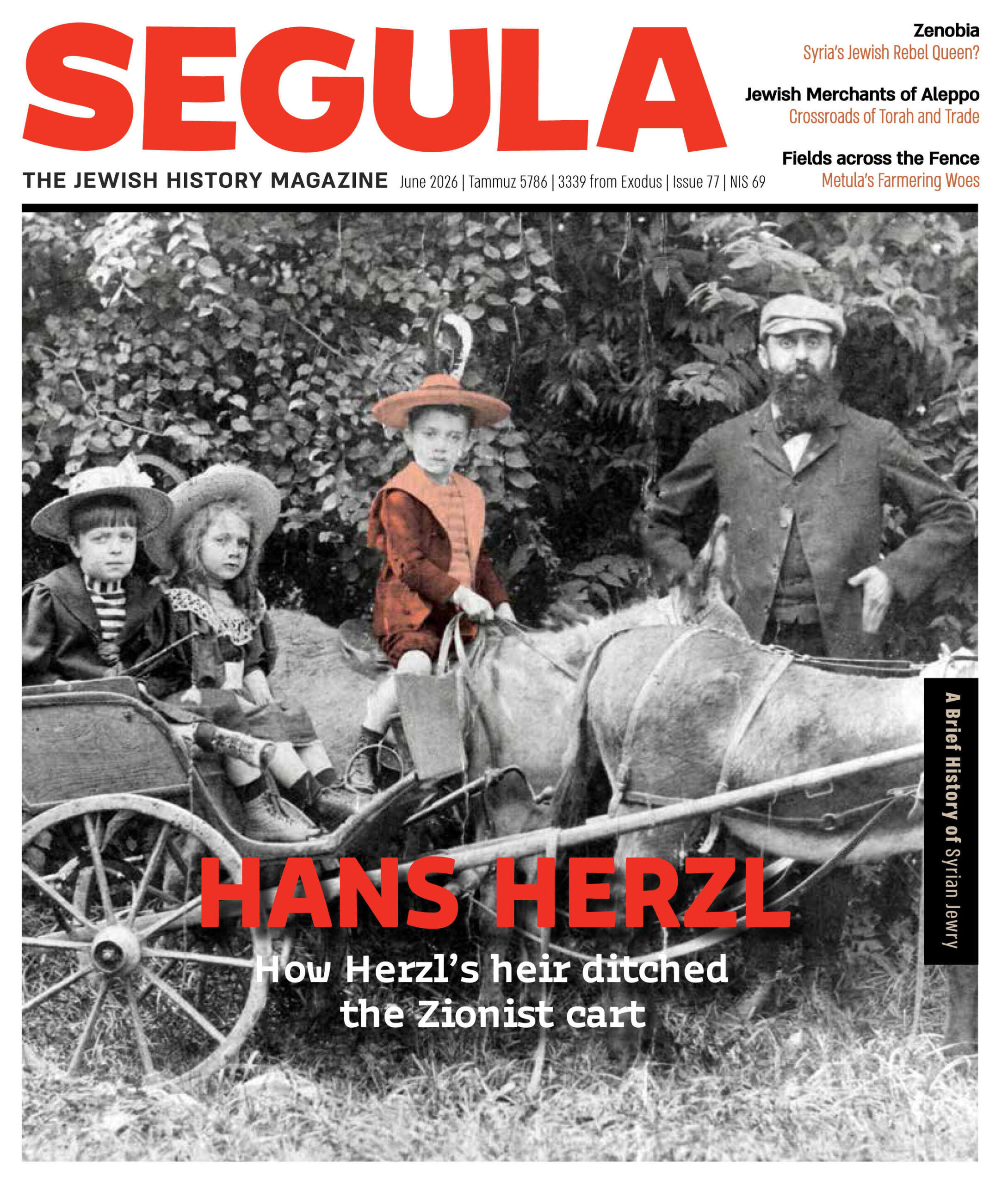
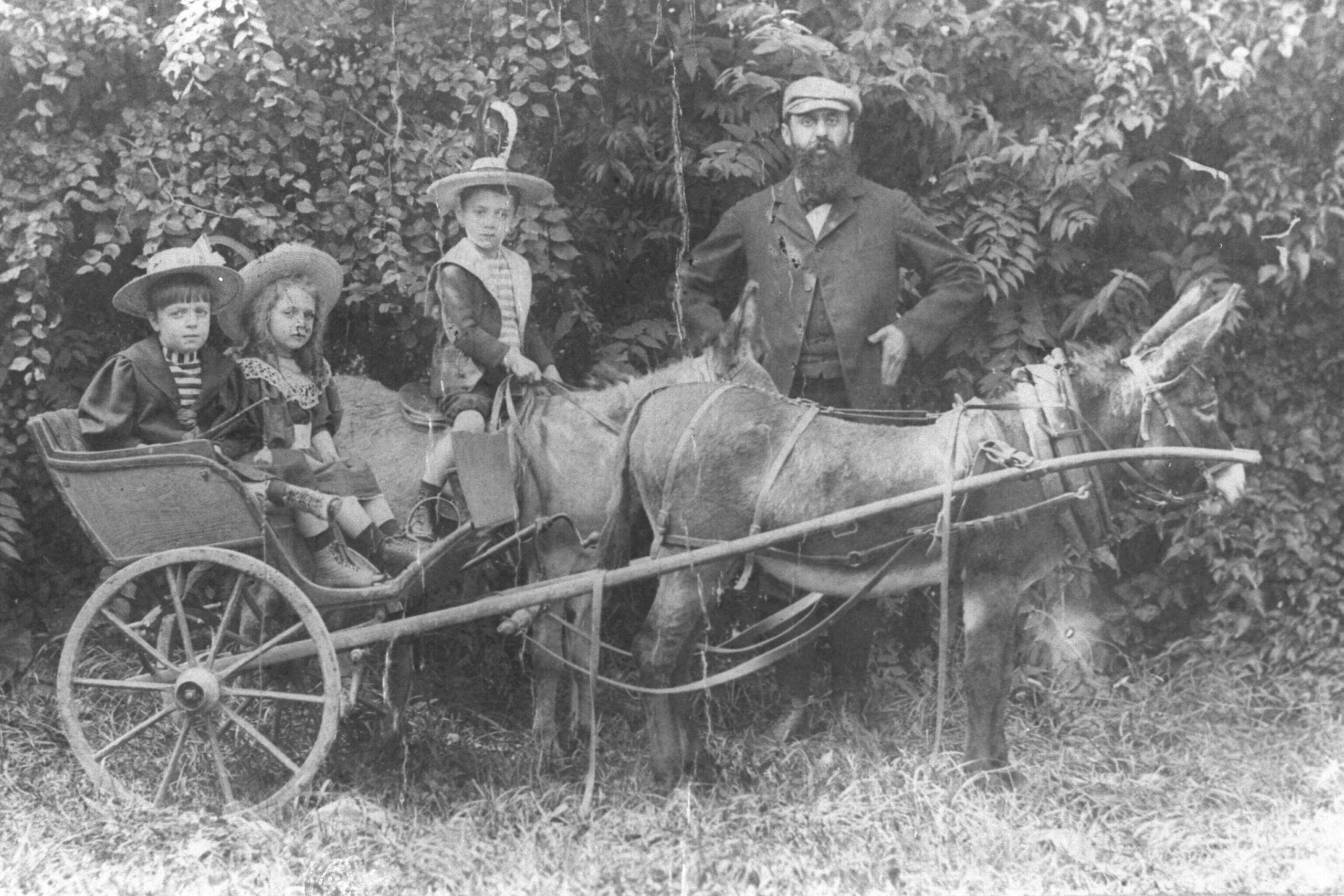
The conversion to Christianity of Theodor Herzl’s son Hans shocked the Jewish world. The Jewish press saw the young orphan’s spiritual search as nothing less than a national crisis. His quest for identity made headlines – and inspired a joke that ended up in court

Hans Herzl’s connection to Judaism was always tenuous. His parents didn’t circumcise him at birth, and only at age fifteen – two years after his father’s death – did he undergo the procedure at the urging of Herzl’s Zionist friends and admirers. Hans presumably read his father’s writings, including the ambivalence he expressed in 1893 regarding Judaism:
I myself would never convert, yet I am in favor of conversion. For me the matter is closed, but it bothers me greatly for my son Hans. I ask myself if I have the right to sour and blacken his life as mine has been soured and blackened.
… When he grows up I hope he will be too proud to abjure his faith, though evidently he will have as little of it as I.
[…] one must baptize Jewish boys before they must account for themselves, before they are able to act against it, and before conversion can be construed as a weakness on their part. (Amos Elon, Herzl [Holt, Rinehart and Winston, 1975], p. 115)
After solidifying his Zionist vision, Herzl rejected conversion:
At first, the Jewish Question grieved me bitterly. There might have been a time when I would have liked to get away from it – into the Christian fold, anywhere. But in any case, these were only vague desires born of youthful weakness. […] I never seriously thought of becoming baptized or changing my name. (The Complete Diaries of Theodor Herzl, ed. Raphael Patai [Herzl Press, 1960], vol. 1, p. 4)
Herzl’s only son converted to Christianity a century ago, shortly after Zionist communities around the world marked twenty years since the passing of the visionary of the Jewish state. Hans was thirty-three when baptized in Vienna.


A short life full of emotional turmoil and loss. Hans Herzl as a child, as a youngster, and in his thirties | David B. Keidan Collection, Central Zionist Archives, Widener Library
Not yet a Segula subscriber?
Access our full archive online, have print issues delivered to your door, and moreFeel free to share