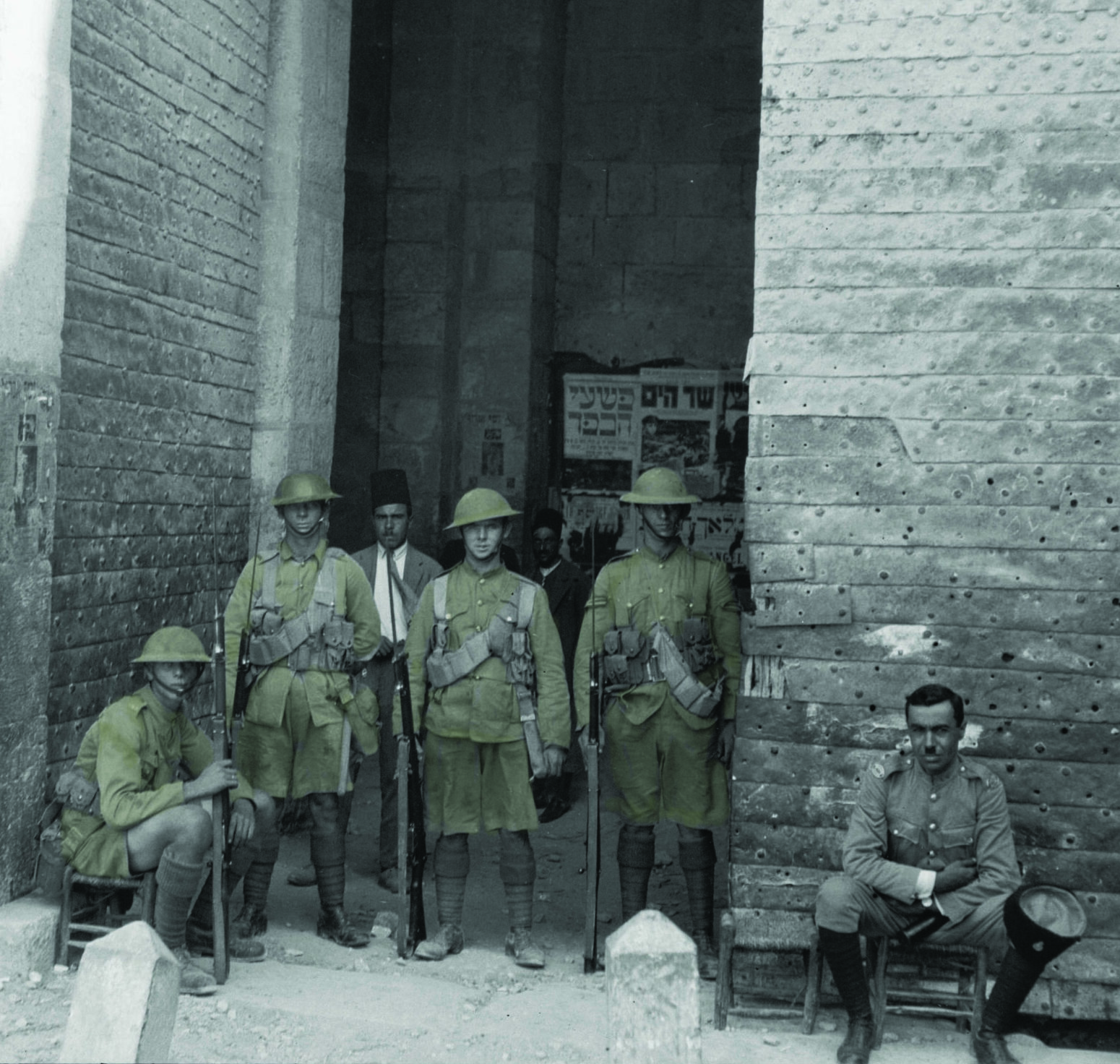
They weren’t partial to either Arabs or Jews. But when a group of British divinity students on a summer pilgrimage to the Holy Land found themselves caught up in Arab attacks on the Jewish population, they helped the Mandate authorities restore order. Dennis Gilmore’s diaries provide eye-opening testimony to the Arab riots of 1929

Wycliffe Hall, Oxford, was founded in 1877 to train evangelical clergy for the Church of England. In the summer of 1927, after half a century of solid achievement, its principal, the Rt. Rev. George Francis Graham Brown, took the students to Palestine to commemorate the institution’s jubilee. The program provided future ministers with such invaluable insights, it was resolved to repeat the experiment two years later. This time, however, circumstances were different.
Little did we think that this […] Summer Vacation Term in Palestine would provide us with such experience of life in the Near East as has never before fallen to the lot of Ordination candidates. (G. F. Graham Brown, “Wycliffe Hall, Oxford, 1925–30” [undated], Wycliffe Hall Archives, pp. 4–5)

Altered Landscape
Unbeknownst to Rev. Graham Brown and his charges, much had changed since 1927. Lord Herbert Plumer had completed his term as high commissioner a year earlier, and Stewart Symes, his chief secretary, had also left the country. A new commissioner had yet to be appointed, so the gap was filled by the new chief secretary, Harry Charles Luke, with Edwin Samuels – son of the first commissioner, Herbert Samuels – as his assistant.
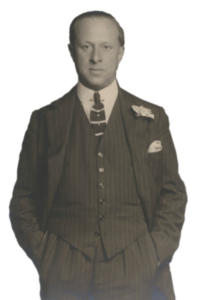
With the approach of the Jewish holidays in September 1928, growing tensions between Jews and Arabs at the Western Wall put this leadership vacuum to the test. Foreshadowing the events that rocked the country a year later, the Muslim leadership – headed by Jerusalem mufti Haj Amin al Husseini (1897–1974) – objected to the erection of a partition dividing men from women in preparation for prayer on Yom Kippur. Claiming a violation of the status quo at a site that – as a supporting wall of the Temple Mount – was holy to Muslims, they demanded the screen be removed. Lt.-Col. Frederick Kisch, chairman of the Jewish Agency’s Palestine Zionist Executive, who’d served as a British officer in World War I and liased extensively with the Mandate authorities on behalf of Palestine’s Jewish community, wrote in his diary:
On the Day of Atonement, September 24th 1928, […] the police broke into the crowd of worshippers […] to remove a portable screen which had been placed there on the eve of the Fast to separate the sexes […].
Unfortunately the Mufti saw in the Jewish reaction to the incident of the screen at the Western Wall a means of rousing fanaticism against the Jews, and almost immediately there was spread throughout the country a rumour that the Jews were threatening the Moslem Holy Places in the Haram Area.
In the name of the Executive, I immediately issued a public declaration that […] the Zionist Organization reaffirmed its repeated declarations unreservedly recognizing the inviolability of the Moslem Holy Places. But the spark had been set […]. (F. H. Kisch, Palestine Diary, p. 245)
British policeman Douglas V. Duff described the events from a slightly different perspective in his autobiographical Bailing with a Teaspoon. Anticipating trouble, Duff procured signed permission to intervene should events get out of hand. Then, seeing armed Arabs pouring down from the souk even as Jews fled from the Wall back toward the Jewish Quarter, he blocked the Arabs’ progress with his men and sent three more police officers to cut off the mob. Although reprimanded for his actions that day, he was convinced that he’d prevented a massacre of Jews – such as occurred almost a year later, in the summer of 1929.
Throughout 1928 and 1929, the Western Wall issue remained explosive, and the mufti exploited it at every turn. A new high commissioner, Sir John Chancellor, arrived in December 1928, and in the spring of 1929, the Islamic Council began maintenance work on the Temple Mount, resulting in more Muslims congregating at the wall and increasingly violent provocations against Jewish worshippers there.
On 9 Av, the date of the Temple’s destruction – and less than two weeks into the British students’ tour – the Revisionist Zionists decided to respond. Authorized by Rabbi Abraham Isaac Hakohen Kook, chief rabbi of Mandate Palestine, they marched to the Western Wall, with members of the Betar youth movement carrying flags through the Old City. The procession culminated in a rousing chorus of the Zionist anthem, Ha-tikva.
The mufti used this event to spread rumors of a Jewish takeover of the mosques in the Temple Mount area. The stage was set for murder and mayhem by an enraged Muslim populace.
The next day, the anniversary of Muhammad’s birth, Arabs streamed from the Temple Mount to the alleyway next to the Western Wall and destroyed all the prayer books there. A week later, bloodthirsty riots broke out against the Jewish populations of Jerusalem, Hebron, and other vulnerable settlements.
Not yet a Segula subscriber?
Access our full archive online, have print issues delivered to your door, and moreFeel free to share