What made Hollywood’s favorite screenwriter work for the Zionist underground? Was it Ben Hecht’s warm heart, his stormy personality, his shocking discovery of Nazi atrocities – or all three? In any case, the resulting production inspired the American government to aid postwar Jewish refugees in Europe

September 4, 1946. Brimming with emotion, Ben Hecht stood center stage. Tears filled his eyes, blurring his view of the cheering crowds below. Of all his many plays, scripts, books, and articles, this time he’d given his all. Aside from his personal triumph, it was much larger than he, than any individual. Framed by the spotlight of Broadway’s legendary Alvin Theater, wearing the suit he reserved for premieres, Hecht knew this was a moment of national redemption that no one in attendance would ever forget.
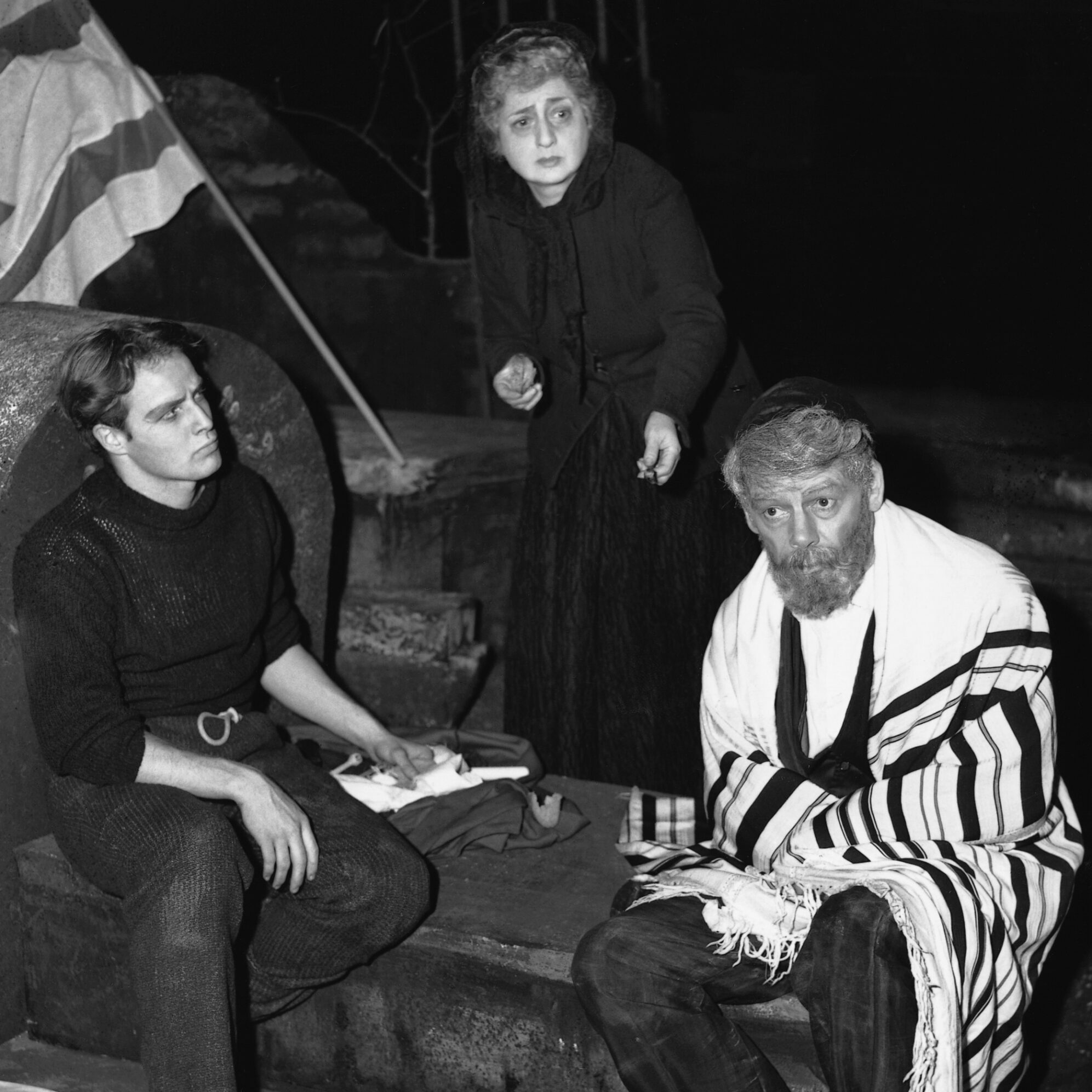
Against the backdrop of the final act of A Flag Is Born, the cast took its bows, with Marlon Brando in the center. This was no ordinary performance; it was a fundraiser, perhaps the biggest ever on Broadway. Ben Hecht had engaged his considerable talents and connections to make this evening a smash. Running all over New York, cajoling, arguing, and even threatening anyone who stood in his way, he’d written, rewritten, and overseen the production’s every detail, ensuring unprecedented success.

Tevye’s Dream
The one-act play featured Tevye and Zelda, a pair of Holocaust refugees en route from the horrors of Europe to a new life in the land of Israel. Stranded in a ruined cemetery, they prepare to greet the Sabbath with prayer and song. They’re joined by David, an angry young survivor. First Zelda expires, then Tevye, and David decides to emigrate in their place and preserve their memory by defying the British Mandate and fighting for a Jewish homeland. Time and again, the action hinted at parallels to the U.S. War of Independence, also waged against Britain. In the drama’s final moments, David waved Tevye’s fallen prayer shawl and delivered an impassioned Zionist speech. The shawl became a flag, and the curtain fell.
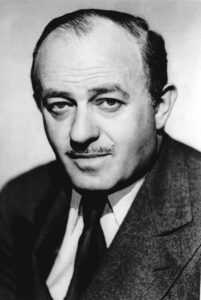
Hecht recruited some of the biggest names in American culture and society for the event’s sponsoring committee, including composer Leonard Bernstein, novelist Lion Feuchtwanger, New York City mayor William O’Dwyer, and former first lady Eleanor Roosevelt; their responsibilities included both publicity and fundraising. One hundred and twenty Broadway performances plus a nationwide tour raised an unheard-of four hundred thousand dollars for Jewish immigration to Palestine.
In the run-up to opening night, the cast stayed at Hecht’s lavish suburban home in Nyack, New York. Famous Zionists enjoyed his hospitality as well. Around the pool, they rubbed shoulders with Irgun underground activists from Mandate Palestine, busily planning their next operation.
Brando, then just twenty-four, was already a rising star but eager to work with castmate Paul Muni, a well-known stage and screen actor. Later famed for his outspoken politics, Brando totally immersed himself in the project, speaking at fundraisers and working for scale.
Brando’s final speech as David was the play’s climax. Pointing a finger at his American audience, he demanded, “Where were you, Jews? Where were you when six million were burned to death in the ovens?” His voice rising, Brando repeated his question: “Where were you?!” The implicit accusation sent chills through his listeners, he recalled. Jewish girls wept in the aisles.
At the time there was a great deal of soul-searching within the Jewish community over whether they had done enough to stop the slaughter of their people; some argued that they should have applied pressure on President Roosevelt to bomb Auschwitz, for example – so the speech touched a sensitive nerve. (Marlon Brando with Robert Lindsey, Brando: Songs My Mother Taught Me [Random House, 1994], p. 108)
Hecht cleverly exploited these emotions, ending each performance with an unabashed appeal: “Give us your money, and we will turn it into history” (David S. Wyman and Rafael Medoff, A Race Against Death: Peter Bergson, America, and the Holocaust [New York: New Press, 2002]). (One reporter complained that the play had cost him dearly, since aside from purchasing a ticket, he’d felt obliged to make a donation.)
Many critics raved, but the New Yorker panned A Flag Is Born as shallow propaganda. Denounced by British journalists as the most anti-British play ever staged in the United States, the show was banned all over the British Empire.

Movie poster for Hecht’s film Underworld


Unsung hero. Hecht penned most of the final script of Gone with the Wind, often considered Hollywood’s greatest achievement. Yet his name appeared in neither the credits nor the ads, including this one from 1939
Scarface, for which Hecht won an Oscar in 1932, was inspired by the Chicago gangsters he’d covered as a cub reporter. Movie poster
Not yet a Segula subscriber?
Access our full archive online, have print issues delivered to your door, and moreFeel free to share