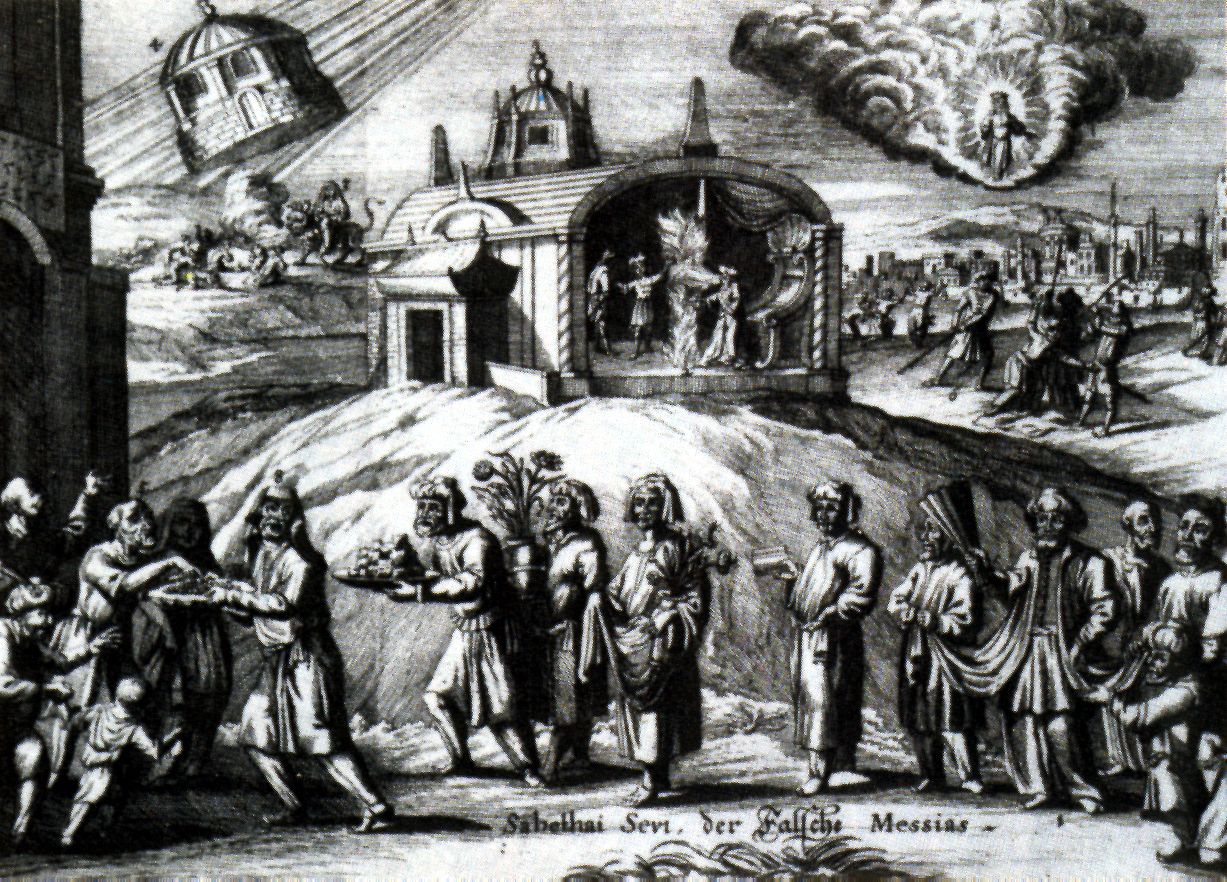
The synergy between Nathan of Gaza, a charismatic young genius, and Shabbetai Tzvi, a complex, troubled personality, led to a dramatic upheaval among the Jewish people. A glimpse into the unbelievable Sabbatean story

When I had attained the age of 20, I began to study the Zohar and the Lurianic writings. [According to the Talmud] whoever wants to purify himself receives the aid of Heaven; and thus He sent me some of His holy angels and blessed spirits, who revealed many mysteries of the Torah to me. That same year, energized by the visions of the angels and the blessed souls, I was engaged in a prolonged fast during the week before the feast of Purim. I locked myself in a room in holiness and purity, and as I tearfully recited the penitential prayers of the morning service, the spirit came over me. My hair stood on end, and my knees shook. And I beheld the merkava [divine chariot], and I saw visions of God all day long and all night. I was vouchsafed true prophecy like any other prophet, as the voice spoke to me, beginning with the words “Thus speaks the Lord.” With utmost clarity my heart perceived toward whom my prophecy was directed… and only then did the angel permit me to proclaim what I had seen. I recognized that he was [the] true [Messiah]…. And indeed the angel that revealed himself to me in my waking vision was a genuine one, and he revealed awesome mysteries to me.
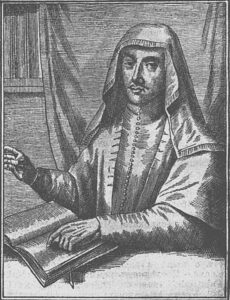
This amazing vision was recorded in 1667 by a mysterious young kabbalist whose name later became famous throughout the Jewish world: Nathan ben Elisha Hayyim Ashkenazi – or, as he is better known, Nathan the Prophet of Gaza (1643–1680).
Who was this man? How did he set one of the greatest revolutions in Jewish history in motion? From where did he draw the skill and power to sweep the Jewish masses – along with their leaders, magnates, rabbis, and kabbalists – so that they burned with belief in a messiah who heralded the end of history?
Explosive Energy
A close disciple of the well-known halakhic authority Rabbi Jacob Hagiz of Jerusalem, Nathan was considered a rare prodigy. His days and nights were spent in endless study, and he engaged in fasting and self-mortification to purify his soul.
At age 20, once he had married, he entered the gates of hidden wisdom. Within two years he had mastered the Zohar and the writings of both Rabbi Moses Cordovero and Rabbi Isaac Luria (the Ari). As soon as he entered the Pardes, the realm of mysticism, his soul exploded. The resulting spiritual energy transformed him and his self-image; he became someone else, something else.
In addition to his powerful spirituality and his daringly original religious conception, Nathan had other strengths. His great concentration and persistence enabled him to engage in intensive activity for extended periods. He had tremendous willpower. He was eloquent both in person and in writing. He was systematic. Most important, he had rare interpersonal skills. People felt he could read their souls, and they were captivated by his charm.
Following his purported revelation and prophecy, Nathan began “rectifying souls.” He revealed his acquaintances’ darkest secrets, their innermost thoughts, and led them to repentance. Raphael Joseph Hajilibi – Egyptian minister of finance, governor of the Jewish community in Egypt, and a scholar in his own right – sent rabbis to examine the young kabbalist. They too were enchanted by his knowledge and spiritual power, and joined him.
One of those who traveled from Egypt to see Nathan was a scholar of some 40 years of age, a man of crushed spirit, named Shabbetai Tzvi. He arrived in Iyyar 5425 (1665) “seeking repair and respite for his soul.” But “when our master, Rabbi Nathan, saw him, he prostrated himself before him and asked his forgiveness for not having become his disciple when he first went down to Egypt, and announced that he had an extremely great soul.”
Rising and Falling
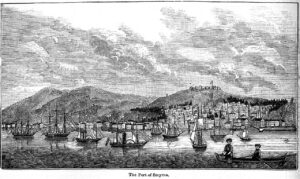
In 1626, on the Ninth of Av – a date traditionally associated with the birth of the Messiah – Shabbetai Tzvi was born in Izmir, once of the largest and most magnificent Jewish communities of the Ottoman Empire. He studied under rabbis Isaac di Alba and Joseph Escapa and apparently was ordained himself at the age of 18. He began studying Kabbala independently, however, without teachers, focusing on the early kabbalistic works – the Zohar and Sefer Ha-kaneh – rather than on the Lurianic Kabbala accepted in his day.
Until the age of about 20, Shabbetai led a normal life. But when he married his first wife, he began behaving strangely. Shortly after the wedding, his father-in-law complained to a rabbinic court that the groom was avoiding his wife. Following this claim, Shabbetai divorced her. A few months later he remarried, but this wife received similar treatment. Not surprisingly, this marriage, too, ended in divorce.
Early reports of Shabbetai’s peculiar behavior suggest that he was bipolar, or manic-depressive. Periods of ecstasy and fervor, accompanied by a sense of mission and commitment, gave way to bouts of mohin de-katnut (“restricted consciousness”), seclusion, melancholy, and depression, in which he felt himself pursued from both within and without.
In 1648, amid the terrible Khmelnitsky pogroms – and increasing expectations of the Redemption – Shabbetai Tzvi heard an inner voice: “You are the Redeemer of Israel!” it declared. “I swear by my right hand and strong arm that you are the True Redeemer, and there is no other!” Initially, no one took him seriously, but then his behavior took a dramatic turn: he would pronounce the Tetragrammaton (the four-letter name of God uttered only in the Holy Temple) in the synagogue; he attempted to make the sun stand still at noon, as Joshua had done, by use of holy names derived from practical Kabbala; and he committed various transgressions, claiming they were actually mitzvot. By 1651, the rabbis of Izmir – headed by Rabbi Joseph Escapa – began to lose patience with his strange behaviors, and in 1654, they expelled Shabbetai Tzvi from the town.
Not yet a Segula subscriber?
Access our full archive online, have print issues delivered to your door, and moreFeel free to share